Precision Lightning Sensor (PLS)


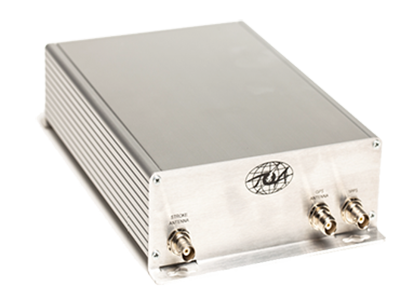
    The latest generation of TOA's Precision Lightning Sensor (PLS) is shown in the photograph below.  The PLS has enormous advantages over other lightning sensor designs, in particular those based on magnetic direction finding (MDF) which suffer from significant site introduced errors and consequent high siting coasts.  The PLS can be installed on existing structures, towers, and buildings where access to electric power and communications is readily at hand.  The PLS is also extremely adaptable in terms of communications; it's design allows it to transmit its data by telephone, network, internet, or radio as is deemed best suited to the requirement.


PLS
PLS
Antennas
Antennas mounted on roof


PLS Overview
The detector part of the sensor is a broadband receiver. This picks up a substantial amount of the lightning energy that allows the system to distinguish between ground lightning and cloud lightning.   With a broadband detector the different characteristics of ground strokes and cloud strokes can be identified.  This allows classification of the detected strokes by the PLS sensors.

In a time-of-arrival based system, timing is an important part of the receiver. The PLS receiver uses commercial GPS timing as a reference. The sensor uses a high frequency timing source that makes the timing more stable, accurate and increases the resolution. The timing is constantly monitored and corrected. This results in more accurate lightning locations.

An onboard processor handles communications and monitors the over-all operation of the sensor. It keeps track of the timing system.
The sensor is designed for remote configuration of the hardware. This is accomplished using Field Programmable Gate Array (FPGA) technology. This allows remote configuration of the hardware using bit patterns. Upgrades can be performed without visiting the site.

The sensor is also designed for remote configuration of the software. Software is downloadable over the communications link. The programs are stored in non-volatile memory on the board. It is not affected by power glitches, losses, or outages. Again, upgrades can be performed without visiting the site.


PLS Functionality


Precision Lightning Sensor Specifications
Operational:
Detection Range

Designed for customer needs from 30 to over 1000 km
Digitizing Resolution
12 bits
Digitizing speed
25 MSPS
Timing Accuracy
-200 nsec to UTC
System Timing Accuracy
+/-20 nsec Receiver to Receiver
Timing Resolution
25 nsec
Detection Dead Time
100 µsec typical, depends on user settings
Lightning Waveform Available
Yes
Number of points in Waveform
User selectable
Sensitivity Control
Detection Threshold setting and Front-end Gain setting
Program upgrade
Designed for remote program upgrade
Remote Diagnostic capability
Temperature power supply readings
DAC setting readings
Factory detail diagnostics
Self Test
Antenna:
Mounting

Roof, Pole, or Tower Mount
Lightning Antenna
Vertical Wipe
GPS Antenna
Active Volute